Nursery furniture in Australia has evolved far beyond “just a cot and a change table.” Today, many Australian parents design nurseries that feel calm, functional, and aesthetically cohesive—spaces that support sleep routines, easy cleaning, and long-term use as the baby grows. At the same time, there’s a clear shift toward natural textures and warmer, organic interiors. This is exactly where rattan kids furniture fits in: it blends beautifully with modern Australian nursery styles, while offering a lightweight, versatile, and visually soft look that works well in both coastal homes and urban apartments.
In this article, we’ll explore what defines the nursery furniture market in Australia, what Australian buyers typically prioritize (especially for safety and usability), and how rattan kids furniture has spread across Australia through interior trends, retail distribution, and lifestyle-driven demand.
Understanding the Nursery Furniture Landscape in Australia
Australia’s nursery furniture category is shaped by a few consistent factors: safety expectations, practical space planning, and a strong culture of home styling. Nursery furniture is typically purchased in the late pregnancy stages, which means parents often make decisions quickly but still want high confidence in quality. Many Australian families also prefer furniture that can “transition” to toddler years—choosing convertible cots, dressers that double as change stations, and storage solutions that remain useful after the newborn phase ends.
Another important factor is Australia’s diverse housing mix. In major cities like Sydney and Melbourne, nurseries are often compact rooms or corners within a bedroom. In suburban and regional areas, nurseries may be larger and designed with more flexibility. This variation creates demand for multiple nursery furniture types: space-saving sets for apartments, and larger collections for family homes that may include a rocking chair corner, toy storage zones, and decorative shelving.
As a result, nursery furniture in Australia isn’t a single “style category.” It ranges from minimal Scandinavian-inspired sets to classic white timber collections, and increasingly, to nature-inspired nursery interiors featuring cane, rattan, woven baskets, and soft wood tones.
What Australian Buyers Look For in Nursery Furniture
Even though nursery style matters, most Australian buyers still start with three essentials: safety, durability, and practicality. The best-looking nursery is worthless if the cot feels unstable, the finishes smell harsh, or storage is poorly designed. Parents commonly look for furniture that feels solid, easy to clean, and safe for daily use.
Practicality also matters because nursery furniture is used intensely. Drawers are opened dozens of times per day. Shelves are filled and refilled. Change tops are wiped constantly. Handles, hinges, and rails are touched repeatedly. For Australian parents, high usability often becomes the deciding factor—especially for families preparing for a second child or wanting nursery furniture that can last.
At the same time, a growing group of buyers also consider material origin and sustainability. While not every purchase is eco-driven, many Australian consumers do respond positively to natural materials and furniture that feels “less synthetic.” That’s part of the reason rattan kids furniture has become more visible across Australian nurseries—particularly for accent pieces and decorative functional items.
Why Rattan Kids Furniture Matches Australian Nursery Aesthetics
Australia’s interior design culture strongly embraces natural light, airy color palettes, and relaxed textures. Whether it’s a coastal Queensland home, a modern Melbourne apartment, or a family house in Perth, Australian interiors often favor materials that feel warm and grounded. Rattan aligns naturally with this preference because its woven texture softens a room without making it feel heavy.
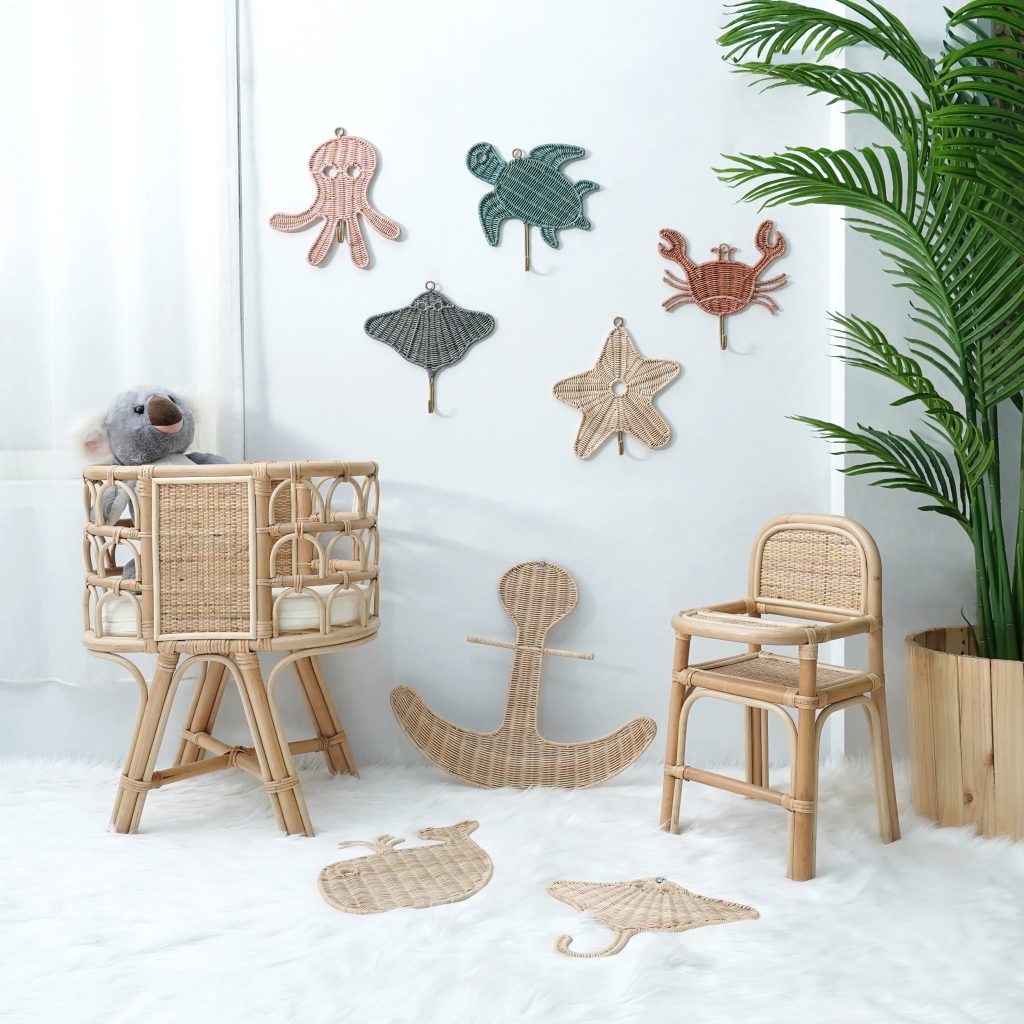
In nurseries specifically, rattan furniture creates a gentle visual mood. It pairs well with white walls, neutral rugs, linen curtains, and wooden floors. It also complements popular nursery themes in Australia such as coastal, boho, minimalist, and nature-inspired styling. Rattan can make a nursery feel curated but still comfortable, which is exactly what many parents want when preparing a baby’s space.
Another reason rattan works well is that it doesn’t overwhelm the room. A bulky dark wardrobe might dominate a small nursery, while a woven rattan shelf or rattan toy basket visually “breathes.” This makes it especially appealing in smaller Australian homes where design choices must balance function and space.
The Role of Rattan in Nursery Function: Not Just Decoration
A common assumption is that rattan kids furniture is purely decorative. In reality, in Australian nurseries, rattan is often used in highly practical ways—especially in categories where lightweight, breathable storage and flexible placement matter.
For example, woven rattan baskets are widely used for nappies, baby blankets, soft toys, and laundry sorting. Rattan shelves or wall-mounted pieces can support books and small decor without adding visual heaviness. Some families also choose rattan toy chests, small cabinets, or toddler chairs as the child grows, creating a consistent aesthetic that transitions smoothly from “nursery” to “kids room.”
Rattan is also particularly loved for “softening” the nursery environment. Many nursery furniture items are hard-edged and boxy by necessity. Rattan helps balance that with curves, weave patterns, and a hand-crafted look that makes the room feel less clinical.
How Rattan Kids Furniture Has Spread Across Australia
The spread of rattan kids furniture across Australia isn’t accidental. It has grown through a combination of style influence, retailer visibility, and social media-driven interior culture. Australian parents frequently browse nursery inspiration online, and woven textures photograph extremely well. As natural materials became more prominent in Australian home styling, rattan followed into nursery design.
Retail distribution also plays a major role. Once major homeware and baby retailers began stocking rattan-style baskets, shelves, and kids accent furniture, rattan stopped being a niche “boutique only” material. It became familiar and accessible in metropolitan areas and then flowed outward into regional and suburban buying patterns.
Another driver is the popularity of boho and coastal nursery styling in Australia. These styles are strongly compatible with woven furniture, cane accents, and natural fiber decor. When parents build a nursery that matches the rest of the home’s style, rattan becomes an obvious choice—especially if the home already uses timber, linen, and warm neutrals in other rooms.
Nursery Furniture Categories Where Rattan Performs Best
In Australia, rattan is most often used where it adds both function and visual warmth. The categories below are where demand tends to be strongest:
Rattan storage pieces are a major category, including toy baskets, shelving units, and laundry baskets. These items offer immediate practicality and are easy to style. Parents can also move them around the home as needed, which adds to their long-term value.
Rattan seating is another area of growth, particularly toddler chairs or small lounge-style pieces used later in the child’s development. These items are often purchased after the first nursery setup, which means they become “add-on upgrades” that refresh the space without replacing major furniture.
Rattan decor-functional hybrids—such as wall shelves, book displays, or small cabinets—are also popular because they create a designed look while still serving a purpose. Australian nurseries often lean toward minimal clutter, so furniture that doubles as display and storage is highly valued.
Balancing Nursery Safety and Material Choice
When discussing nursery furniture in Australia, safety is always central. Parents generally prioritize sturdy construction, smooth finishes, and safe spacing on sleep-related products. For rattan kids furniture, the safest and most common use tends to be in non-sleep items such as storage baskets, shelves, toy storage, and accent seating for older toddlers (depending on product design).
For any nursery furniture purchase, Australian buyers typically look for clear product details, age guidance, and care instructions. Rattan can be an excellent material when it is properly crafted, sealed, and designed for real use. Like timber, it benefits from good finishing and thoughtful construction. Families also appreciate when suppliers provide realistic guidance on cleaning, maintenance, and humidity considerations—especially in coastal Australian areas where environmental conditions can vary.
The Future of Nursery Furniture Australia: Natural Materials and Global Sourcing
Nursery furniture in Australia will likely continue moving toward warm minimalism: fewer bulky pieces, more flexible storage, and more natural textures. Rattan fits this future perfectly because it can be used in both traditional and modern nursery setups. It also works as part of a “layered” nursery—where main furniture is typically timber or painted MDF, while accent furniture and storage solutions bring personality through texture.
Another important trend is global sourcing. Australia is an import-reliant market for many furniture categories, and rattan production is closely associated with regions that specialize in woven craftsmanship and natural material supply chains. As Australian buyers become more style-aware and material-conscious, rattan kids furniture is likely to remain strong—especially when it is positioned as a durable, beautiful, and functional choice, not merely a trend.
Why Rattan Kids Furniture Belongs in the Australian Nursery Conversation
Nursery furniture in Australia is increasingly about lifestyle, not just necessity. Parents want safe and practical furniture, but they also want a space that feels calming and beautiful. Rattan kids furniture supports that goal by adding organic warmth, natural texture, and versatile storage options that work in both compact city homes and spacious suburban nurseries.
As rattan continues spreading across Australia through interior trends and retailer availability, it’s becoming a familiar part of the modern nursery—especially for families who value a soft, natural aesthetic with functional everyday use. If you’re building a nursery setup that feels timeless and welcoming, rattan is no longer just an accent choice. In many Australian nurseries today, it’s becoming a defining element of the room’s character.